Tuesday, June 1, 2010

June: Gay and Lesbian Pride Month

photo of John Cage and Merce CunninghamWhat began as a single day of pride commemorating the Stonewall Riots of 1969 that sparked the Gay Liberation Movement has grown to a whole month: In 2000, June was designated an official month of celebration and memorials.

Music wasn't as integral to this movement as it was to the Civil Rights movement, but the movement did impact scholarship and creativity in music. Long-dead composers whose private lives remained private have been "outed" and some living musicians have declared their sexual orientation publicly.

"Queer" theory has played a role in recent music scholarship, and sexual identity has become a topic of scholarly inquiry in music:

Queering the pitch: the new gay and lesbian musicology
ML 55 .Q44 1994

Queer Noises: Male and Female Homosexuality in Twentieth Century Music by John Gill
ML 63 .G49 1995

Songs in Black and lavender : race, sexual politics, and women's music, by Eileen Hayes
ML 82 .H42 2010
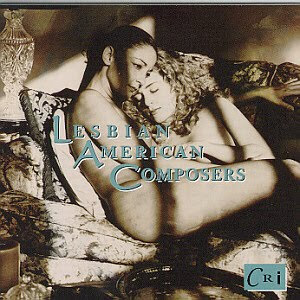
Album Cover of Gay American ComposersAlbum Cover of Lesbian American ComposersSeveral of the Twentieth Century's top composers were gay. You can hear the variety of styles they represented on Compact Disc 4419, Gay American Composers and Compact Disc 4904, Lesbian American Composers

Friday, May 28, 2010

Songs for Racing Fans

The Indy 500 is two days and 70 miles away. Here are some song suggestions to set the tone:


One of the best known early car songs comes from the 1930s: "Terraplane Blues" by Robert Johnson Nobody remembers the car anymore, but Robert Johnson is still revered as possibly the best blues artist ever recorded, and this song is one of his signature songs.


1935 Hudson Terraplane
From the 1950s:
Chuck Berry, No Particular Place to Go

From the 1960s:
Beach Boys: 409, Fun Fun Fun, and Little Deuce COupe
Jan & Dean: Dead Man's Curve
Ronny & the Daytonas Little G.T.O.


1961 Chevy Impala 409
From The 1970s:Commander Cody and his Lost Planet Airmen: Hot Rod Lincoln
Janis Joplin: Mercedes Benz
War: Low Rider
Blackfoot: The Highway Song


Low Rider Car

From the 1980s & later:
Gary Numan: Cars
Queen I'm in Love with My Car
Bruce Springsteen's Cadillac Ranch
Or you could just check out the music of The Cars.


For fun reading, check out this list of the 100 Greatest Car Songs.

Tuesday, May 25, 2010

We're Moving!!! (Temporarily)

Due to an upcoming carpeting project, Music Collection materials and equipment are being moved around. Services will continue as usual throughout the summer, but we may have to do some creative work-arounds. Please bear with us!

Some of the audio listening carrels have been dismantled, but you can still use other listening carrels (behind the glass wall) for reserve listening. Just ask at the service counter if you have any questions.photo of empty space where carrels used to be

Books and scores are already being moved to their temporary quarters on the fourth floor. The M2s and M3s are already there! Check for them in the Northeast corner of the Fourth Floor, just past group study rooms 409 and 410.

Research Help by Appointment


If you missed out on last week's research refresher sessions, you can still brush up on your research skills with a one-on-one research consultation. I can help you get started on your term paper research or direct you to more fruitful sources if you've gotten stuck. Summer goes by so fast! Don't let rusty library skills delay your term paper research!

Contact me to set up a time to meet and I'll be happy to help you.

aledmonds@bsu.edu

765-285-5065
BSUMusicLibn on AIM

photo of Amy Edmonds

Wednesday, May 19, 2010

Wedding Music

Planning your wedding? Planning someone else's wedding? Playing a "gig" at a stranger's wedding? The Music Collection has songbooks and recordings to help you get ready for the big day. Musicians & the happy couple can work together to find just the right pieces for the big event.

Check out compact discs of wedding music to hear the common & uncommon selections that you might want your guests to hear. Then the musicians can check out Sheet music (score) selections of wedding music including both secular and religious songbooks. The music collection has music for organ, string quartet, brass quintet, and of course, singers.

If you are a pianist, you might want to consult Maurice Hinson's Classical music for the Wedding Service: Piano Literature Appropriate for the Wedding Service.

The Chamber Music Finder can help you search the catalog for sheet music for specific ensemble types. If you want music for an unusual grouping, such as clarinet, viola, and piano, you can find it there! Just indicate the instrument and number of players using the instrument, and click "search!" You can also type "wedding" into the keyword box to specify music for weddings.

Monday, May 17, 2010

Music Refresher Workshops this week

graphic of class with teacher
I'll be holding music research refresher workshops in Bracken Library 009 (Computer Instruction Room) during the first week of Summer Session at the following times:
Monday3:00 p.m.
Tuesday5:00 p.m.
Wednesday 2:00 p.m.

If you can't come to one of these sessions, call the Music Collection (765-285-8188) to set up an individual reference appointment or send me an e-mail at the address below:
aledmonds@bsu.edu
photo of Amy Edmonds

Tuesday, May 4, 2010

Summer Session 2010

photo of two geese crossing a road with their gosslings
Happy Summer everyone!
The Music Collection & staff are ready to help you with your course and entertainment needs this summer. New books, scores, and compact discs arrive daily.

The Music Collection hours for Summer Session are the same as those for Bracken Library:


Monday-Thursday7:00 a.m. – 3:00 a.m.
Friday7:00 a.m. – 9:00 p.m.
Saturday9:00 a.m. – 6:30 p.m.
Sunday10:00 a.m. – 3:00 a.m.

Monday, May 3, 2010

Cinco de Mayo - celebrate with music!

Photo of a woman in a long Mexican skirt dancingThough not the official national day of Mexico (which is September 16), May 5th, or "Cinco de Mayo" (pronounced Sink-o day My-o) is a day for Mexican-Americans and Mexicans to celebrate their cultural heritage. People mark the day with celebrations with parties and cultural events. The date has become so popular that you no longer need to be Mexican to take part. Like St. Patrick's Day and Oktoberfest, everyone can be Mexican on May 5th.

The most popular Mexican-American/Mexican music style for celebrations is Mariachi (pronounced Marr - ee - ah - chee). In this genre, performers in oversized hats and matching costumes entertain with love songs and sometimes other topics. The groups use only acoustic instruments, including violins, trumpets, guitars, a large guitar with a deep sound (bajo sexto) and sometimes other instruments, such as the folk harp or accordian.

Photo of Mariachi Reyna de Los Angeles dressed in pink mariachi costumes and holding instrumentsBands can have as few as four members but some have over twenty. Traditionally, mariachi groups have been all-male, but women are increasingly active, either in mixed-sex groups or all-women ensembles such as the Mariachi Reyna de Los Angeles (left).

The mariachi band is often the highlight of weddings and quinceñeras (birthday party for a 15-year-old girl) but can be called on for every type of celebration. And of course, they often perform in Mexican restaurants.

The Music Collection has mariachi music that you can check out for your Cinco de Mayo party.

Wednesday, April 28, 2010

Jazz Appreciation Month: Vocalists

Photo of Ella Fitzgerald and Louis Armstrong singing together, links to CD titled Ella & LouisJazz began as an instrumental form, with the combos of New Orleans jazz. During the Swing Era some big bands moved from being primarily instrumental dance bands to bands that backed vocalists, drawing from the popular song traditions of Tin Pan Alley. This became more common during World War II, as radio entertained the troops (who of course might not be dancing). The band was still usually named for the instrumentalist who led the band, and several singers might perform with the band. A few of the singers who fronted these bands became stars in their own right, continuing to sing after Big Bands died out: Frank Sinatra, Bing Crosby, Mel Tormé, Rosemary Clooney, Carmen McRae, Anita O'Day, Pearl Bailey, and Doris Day.

Photo of Sarah Vaughan singingPhoto of Harry Connick, Jr. singing
Women:

Currently active singers:


  • Album Cover for Diana Krall's Live In Paris
Men:


Album Cover for Bobby Short's Songs of New York


Currently active singers:


Photo of Harry Connick Jr.
Vocal groups:
Manhattan Transfer
Andews Sisters
Mills Brothers
Photo of Manhattan Transfer vocal quartet singing

Tuesday, April 20, 2010

Jazz Appreciation Month: Percussion

Famous photo of Gene Krupa at his drumset with a large shadow cast on the wall behind himDrums are essential to African music, and as a style with origins in African-American aesthetics, it's natural that drums would be essential to jazz. There are many kinds of drums and many types of struck instruments that make up the "percussion" section of a jazz group.

photo of basic drumsetThe classic drumset consists of a bass drum (sideways), a snare drum, a second drum with a deeper sound (tom), and cymbals on a stand. The drummer can add an almost unlimited number of drums, cymbals and smaller instruments to the set-up. These small instruments can be common sounds such as cowbell, or exotic sounds from almost any culture of the world.

The drummer traditionally sits at the back of the jazz ensemble, but could sometimes be heard as a soloist. During the Swing Era, many drummers had their turn in the limelight. One of the first big stars of the drumset was Gene Krupa (above) who got his start with the Benny Goodman Orchestra, then went on to lead his own group. He was followed by Buddy Rich, who started his career as a small child in the 1920s, then led his own band and gained national recognition through television appearances, staying active well into the 1980s.

Most of the best drummers have appeared as "sidemen" accompanying soloists as part of the standard jazz rhythm section (guitar or piano, bass, and drums). Because of this, it's difficult to categorize drummers by style. The drumset is the backbone of all the styles, but different parts will be featured. For example, "cool" or West Coast jazz drummers use "brushes" on cymbals for a distinct, soft tone. In Latin-influenced groups hand percussion such as maracas may be more prominent. Many drummers have led long careers spanning styles and adapted to different circumstances. The following is a rough breakdown:

CD cover of Lionel Hampton album Ring Dem BellsBig Band percussionists:

  • Lionel Hampton (vibraphone)
  • Louis Bellson(Count Basie Orchestra).
  • Mel Lewis (Stan Kenton, Thad Jones/Mel Lewis Big Band)
  • Ed Shaughnessy (Benny Goodman, Tommy Dorsey, Count Basie, Tonight Show Orchestra)
Bop & "Hard Bop" style drummers:
album cover for Art Blakey's CD Free For All


Cool jazz drummers:

Fusion:

album cover for Mahavishnu Orchestra Lost Trident Sessions

Friday, April 16, 2010

Jazz Appreciation Month: Trumpet

photo of Dizzy Gillespie playing trumpet2007 poster for Jazz Appreciation Month by the Smithsonian, featuring Louis Armstrong playing trumpet The trumpet (and sometimes its cousins the cornet & flugelhorn) has been one of the leading instruments of jazz since the beginnings of the art.

New Orleans Jazz (also called "traditional" jazz) from the turn of the last century featured trumpet (or cornet), clarinet, trombone, banjo, and tuba or bass. Sometimes the piano was also included, but some theoroize that the New Orleans combo style is an outgrowth of the brass bands that accompanied funeral processions. The style died out when big bands took over the jazz scene in the 30s and 40s, but was revived in the 40s and 50s. Revivalists continue to keep the tradition alive to this day.

In the "Swing" or "Big Band" era, each instrument could be heard in groups ("sections") but some trumpet players played solos from within the section. A few others came to the front as band leaders. One of the most famous was Harry James, who often performed solos with the Benny Goodman Orchestra.

Cover of Miles Davis Birth of the Cool albumAlthough the performers were equal partners in combos of the Bebop (or "Bop) era of the 1950s, some trumpet players became stars in this era. Most notably, Miles Davis began his long career in the 1940s and continued until his death in 1991. He collaborated with top performers of each era, and became one of the most influential musicians of jazz through his revolutionary changes of style. He brought in strands from other popular music styles, creating the controversial "fusion" movement.

Click these links to search CardCat for recordings of the jazz trumpet players listed:
Louis Armstrong
Chet Baker
Bunny Berigan
Bix Beiderbecke
Clifford Brown
Donald Byrd
Miles Davis
Wild Bill Davison
Harry "Sweets" Edison
Roy Eldridge
Art Farmer
Maynard Ferguson
Dizzy Gillespie
Al Hirt
Freddie Hubbard
Thad Jones
Wynton Marsalis
Lee Morgan
Fats Navarro
Red Rodney
Arturo Sandoval
Woody Shaw
Clark Terry

Jazz Appreciation Month: Clarinet & Saxophone

photo of Benny Goodman playing clarinet with his big band's saxophone section behind him The clarinet and its cousin the saxophone have been two of the most popular instruments of jazz since the earliest days of the style. The clarinet was one of the central players of New Orleans jazz, and continued to be popular through the Swing (or "Big Band") era, when Benny Goodman (above) was its chief proponent. Other clarinetist-band leaders of the Swing Era were Artie Shaw and Woody Herman.

The saxophone came to the fore after the Second World War, especially in small combos of the "Bebop" or "Bop" style. Famous saxophonists of the 1950s had often started their careers in the big bands of the 1940s, or as "sidemen" to trumpet players who led small combos. In bebop combos the players have equal roles, but some saxophonists became stars, eventually leading their own groups. "Bop" was characterized by virtuosic playing by all the members of each group. They often took turns improvising a stanza on a pop tune (or "standard"). Many recordings were the result of producers gathering talented players together for a specific recording session. Norman Granz was a famous producer whose Verve label issued recordings of many bebop musicians.
album cover for Coltrane's Giant Steps
One of the most famous jazz saxophonists of the mid-20th Century was John Coltrane. He began his career in a military band during World War 2, then played in the saxophone section of a big band,. After that he joined the Miles Davis Quintet and eventually recorded as the lead performer with his own "sidemen." He and early bop musician Charlie Parker are considered by many to be the greatest jazz saxophonists of all time.

Other great saxophonists include
Jimmy GiuffreDexter Gordon
Kenny G
Sonny Stitt

Monday, April 12, 2010

Jazz Appreciation Month: Guitar

cover of Jazz Icons DVD: Wes Montgomery 1965 The earliest jazz ensembles used the banjo and piano for making chords but with the development of electrification, the guitar replaced it in post-War jazz. Inventor-craftsmen with now-famous names like Gibson, Fender, Les Paul and Rickenbacker turned the soft-sounding instrument into one capable of holding its own against trumpets, saxophones, pianos, and drums. The Smithsonian owns many innovative guitars, and has posted pictures of some important and interesting guitars here. For books on developments in guitar-making, use the subject keyword search guitar and history.

Wes Montgomery (left) was an Indianapolis native who lived from 1923-1968. His idol was Charlie Christian, and he is credited with influencing many of today's guitar players, so he is indeed a "central" figure in guitar history. Critics and afficianados alike consistently place him near the top in lists of the greatest jazz guitarists of all time. Between stints in touring ensembles, he played in many of the Indianapolis jazz clubs of his day while also working first shift in a local factory. He died in his hometown, from a heart attack, at age 44, and is buried in New Crown Cemetery. Indianapolis named Wes Montgomery Park in his honor.

Famous early guitarists:
Les Paul
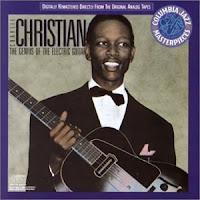
Charlie Christian (right)
Django Reinhardt


Cover of Charlie Christian CD

Guitarists of the 1950s-1960s:
Wes Montgomery
Kenny Burrell (right)
Herb Ellis
Charlie Byrd
Tal Farlow
Bucky Pizzarelli

photo of Kenny Burrell playing guitar

Modern stars of jazz guitar include:
Pat Metheny (right)
George Benson
Al DiMeola
Lee Ritenour

picture of Pat Metheny playing guitar

Friday, April 9, 2010

Jazz Appreciation Month: Jazz DVDs

photo of Great Day in Harlem
The Educational Resources Collection on the Lower Level has many DVDs of jazz performances. The Jazz Icons Series (DVD Video 5243-5249 and 5283-5291) features archival footage of jazz greats performing live in the 1950s and 1960s. Two performances by Dave Brubeck from 1964 and 1966 comprise DVD Video 5346 from this series.

Some other jazz videos:

Ken Burns' Jazz the 10-part TV mini-series by Ken Burns (DVD Video 3523-3532)

Birth of the Blues, a 1941 film in which Bing Crosby portrays a Basin Street musician.

Blues in the night, a 1941 film by Warner Brothers about a traveling jazz band.

The Coltrane Connection. Live performances from television broadcasts of the 1950s and 1960s.

Diana Krall Live in Paris. Filmed live in 2002.

Ella Fitzgerald: the Legendary First Lady of Song

From the Mouthpiece on Back is a documentary about young jazz musicians in post-Katrina New Orleans.

A Great Day in Harlem interviews of the famous musicians involved in the 1958 photograph by Art Kane (above).

Hallelujah, the 1929 film with authentic performances and dancing, including a tap dance by the Nicholas brothers as children.

Jaco Pastorius, Loud and Outrageous. Live performance by the great fusion bass player from the International Festival in Montreal.

'Round Midnight, features saxophonist Dexter Gordon portraying an alcoholic jazz musician in New York and Paris.

Sonny Rollins: Saxophone Colossus, a film by BSU professor Robert Mugge. Includes live performances and interviews.

Vintage Collection: 1958-1961 Television performances by some of the top talent of the era.

Wednesday, April 7, 2010

Jazz Appreciation Month: Jazz Piano

photo of Dave Brubeck Quartet with Brubeck at the piano

The origins of jazz are obscure, but one undisputed early trend is the use of piano in a central role. The piano was part of the small combos of early New Orleans Jazz, played a role in the Big Band/Swing era, came to the foreground in BeBop & Cool (Western) jazz of the 1950s, and continues to be a mainstay of jazz today. This year the Smithsonian features pianist Dave Brubeck for Jazz Appreciation Month. His famous "Take Five" was a crossover hit and is still heard outside of jazz circles today.

Ragtime music on piano is sometimes considered the earliest jazz form, and other early jazz forms also featured the piano. Scott Joplin and Eubie Blake are the best-known of the early piano masters. Other early pianists are Fats Waller, Earl "Fatha" Hines, and Jelly Roll Morton.


In the Big Band era the piano played a less central role, but some of the most important bandleaders were pianists: Fletcher Henderson. Duke Ellington, and Stan Kenton.

Oscar Peterson Trio photograph
The more combo-oriented Bebop style gave the piano room to shine once again. A few pianists became famous as soloists, and many who were associated with top saxophone or trumpet players established their own groups. Check out the piano stylings of Thelonious Monk, Oscar Peterson, Bud Powell, Charles Mingus, Sonny Clark, McCoy Tyner, Erroll Garner or Art Tatum. In the 1960s Bebop evolved into"Hard Bop," which included pianists Horace Silver and Ramsey Lewis.

The West Coast answer to East-Coast bop is known simply as "West Coast Jazz," and though other instruments exemplify this softer-sounding style, pianist Vince Guaraldi (most famous for "Charlie Brown" TV special soundtracks) is considered part of the West Coast movement. "Cool" jazz is also in this vein. The best-known "cool" pianists are Bill Evans, Marian McPartland and Dave Brubeck, though "bop" and "cool" are terms that can equally be applied to several performers.

Album cover for Herbie Hancock's Head HuntersSince the 1970s jazz stylings have been combined with rock, funk, international styles (especially African and Latin American). Some of the more famous bands of the "fusion" movement that combined jazz with rock were headed by pianists: Herbie Hancock (whose "Headhunters" album was jazz's first platinum album), Chick Corea ("Return to Forever"), Josef Zawinul ("Weather Report"), and Toshiko Akiyoshi.

A few pianists have carved out niches as soloists in recent times, most notably Keith Jarrett and Keiko Matsui in the smooth jazz vein. Brian Culbertson plays both piano and trombone as a funk fusion bandleader. Claude Bolling combined classical genres with jazz sounds in his suites.

Saturday, April 3, 2010

Shakespeare and Music

Writers rarely create poems with the intention that they will be turned into song, but one notable exception is Shakespeare. His plays include passsages that are actually songs. Ross Duffin's Shakespeare's Songbook reunites the poetry and music of Shakespeare's plays. Shakespeare also incorporated musical moments into some of the plays or alluded to music within the story. Scholars have investigated the music that was used, and musicians specializing in early music performance have recorded likely songs.

Search CardCat for Shakespeare--Musical Settings to find recordings inspired by Shakespeare.

One famous example of a song based on a Shakespeare text is An Sylvia by Franz Schubert. This song text was written as part of the play, Two Gentlemen of Verona, but the music has been lost.


Picture of Schubert

Who is Silvia? what is she,
That all our swains commend her?
Holy, fair, and wise is she;
The heaven such grace did lend her,
That she might admirèd be.

Is she kind as she is fair?
For beauty lives with kindness.
Love doth to her eyes repair,
To help him of his blindness,
And, being helped, inhabits there.

Then to Silvia let us sing,
That Silvia is excelling;
She excels each mortal thing
Upon the dull earth dwelling:
To her let us garlands bring.

--William Shakespeare (1564-1616)

Was ist Silvia, saget an,
Daß sie die weite Flur preist?
Schön und zart seh ich sie nahn,
Auf Himmelsgunst und Spur weist,
Daß ihr alles untertan.

Ist sie schön und gut dazu?
Reiz labt wie milde Kindheit;
Ihrem Aug’ eilt Amor zu,
Dort heilt er seine Blindheit
Und verweilt in süßer Ruh.

Darum Silvia, tön, o Sang,
Der holden Silvia Ehren;
Jeden Reiz besiegt sie lang,
Den Erde kann gewähren:
Kränze ihr und Saitenklang!

--Eduard von Bauernfeld (1802-1890)

Friday, April 2, 2010

April is Poetry Month


Poetry usually brings to mind arty "readings," poetry slams, and tortured high school English assignments. But we live surrounded by poetry every day, and we usually call it "music." Almost all vocal music is sung poetry. From ancient Greek odes to Renaissance settings of Petrarch to nineteenth-century lieder based on Goethe to modern rap and country music, poetry is the basis for song.

Some poets became favorites of Lieder and art song composers. One place to find settings of a particular poem or poet is Index to Poetry In Music, in the Reference collection: ML128.S3 B69 2003.

The Lied and Art Song Texts Page has indexes by composer, poet, and title as well.

Many composers set "cycles" or groups of songs to poetry by one poet. Favorite German-language poets for cycles were Goethe, Heinrich Heine, and Wilhelm Müller. Use keyword searching to find CDs of music set to specific poets' works, e.g. "heine and compact and lieder or songs."

Search CardCat for books on poetry and music.

Thursday, April 1, 2010

April is Jazz Appreciation Month

2010 poster of Jazz Appreciation MonthThe Smithsonian isn't just about collecting obscure inventions and Hollywood memorabilia. It has a mission to preserve American history, and as part of that mission it has made April Jazz Appreciation Month.

Each April they lead the country in celebrating "America's classic music," and each year they highlight one musician. This year that musician is Dave Brubeck, most famous for the 5/4 instrumental piece "Take Five" from his quartet's 1959 album, "Time Out."Time Out Album Cover Each piece on the album features unconventional meters, as opposed to the 4/4 meter that is the most common time signature in jazz. The most famous track is in 5/4 time, hence the pun in the title "Take Five." It is one of the few jazz instrumentals to make it as a "crossover" into popular culture. The Dave Brubeck Quartet issued several other albums, and Brubeck issued some solo albums as well but none ever had the crossover appeal of "Take Five."


Use Ball State Libraries' Media Finder for non-classical music to search for jazz in CardCat. You can narrow your search by decade, country or keyword.