Welcome back, fellow musicians!
The Lower Level of Bracken Library has new carpeting, and the Ball State Libraries' website has a new design: http://cms.bsu.edu/Academics/Libraries.aspx. It's still in the try-out phase, so try it out and give us feedback on how you think it can be improved. There is a section for the Music Collection: http://cms.bsu.edu/Academics/Libraries/CollectionsAndDept/Music.aspx Feel free to e-mail me personally about that section!
Books and printed music are still on the Fourth Floor, in the opposite corner from the Music Collection. We hope that they will be coming downstairs soon.
--Amy

Wednesday, August 25, 2010


Monday, August 9, 2010
Carpeting Project Update
The new carpet has now been laid throughout the Lower Level West, but things still aren't quite back to normal. CDs are available from the Music Collection counter, but everything else is still waiting for crews to bring them back. Scores and books remain on the 4th Floor East for now.
As always, let us know if there's any way we can be of assistance: 765-285-8188
As always, let us know if there's any way we can be of assistance: 765-285-8188
Wednesday, July 21, 2010
Carpeting Project Update
Hello everyone
The long-awaited recarpeting of the Lower Level has begun, and things look very different this week! Computers and book shelves are gone, as are the listening carrels. Music Collection books and scores are still on the Fourth Floor East, and Music Collection CDs will continue to be available. There may be a day or two when you may have to ask for CDs at a different service point, but don't let that stop you. Signage in the Lower Level Lobby will direct you to the appropriate place.
My temporary office is BL 302, a study room near the West elevators. There's no phone but you can still use the MC phone numbers to reach the MC: 785-8188 (MC counter) or 785-5065 (my phone). Jason Smith, Kevin Blue, and I will continue to have computer access throughout the process, so e-mail is probably the best way to reach us: jsmith@bsu.edu, kjblue@bsu.edu, aledmonds@bsu.edu.
For immediate assistance you can call the main Reference Desk: 785-1101 any time that Bracken Library is open.
For those of you who are enjoying a well-deserved rest and can't come in to enjoy the wide open spaces, I've taken some pictures:


The long-awaited recarpeting of the Lower Level has begun, and things look very different this week! Computers and book shelves are gone, as are the listening carrels. Music Collection books and scores are still on the Fourth Floor East, and Music Collection CDs will continue to be available. There may be a day or two when you may have to ask for CDs at a different service point, but don't let that stop you. Signage in the Lower Level Lobby will direct you to the appropriate place.
My temporary office is BL 302, a study room near the West elevators. There's no phone but you can still use the MC phone numbers to reach the MC: 785-8188 (MC counter) or 785-5065 (my phone). Jason Smith, Kevin Blue, and I will continue to have computer access throughout the process, so e-mail is probably the best way to reach us: jsmith@bsu.edu, kjblue@bsu.edu, aledmonds@bsu.edu.
For immediate assistance you can call the main Reference Desk: 785-1101 any time that Bracken Library is open.
For those of you who are enjoying a well-deserved rest and can't come in to enjoy the wide open spaces, I've taken some pictures:


Thursday, July 1, 2010
Music for 4th of July
America's national anniversary is often celebrated with music for the occasion. Wind bands or orchestras play outdoor concerts, and singers will cross their usual genre distinctions to celebrate American values. Some of the music for this holiday comes from the classical repertoire: Tchaikovsky's "1812" Overture being the most famous example. American compoosers whose music is often featured include Aaron Copland, Morton Gould, and Leonard Bernstein. |  |
Some CDs to help you celebrate:
|    |
Friday, June 25, 2010
Gay & Lesbian Musicians
 |
| Leonard Bernstein and Aaron Copland |
 |
| Benjamin Britten and Peter Pears |
Classical performers:
- Marin Alsop, conductor
- Wanda Landowska, harpischordist
- Virgil Fox, organist
- Peter Pears, vocalist
- Sviatoslav Richter, pianist
- Jean-Yves Thibaudet, pianist
- Michael Tilson Thomas, conductor
- Earl Wild, pianist
| Add caption |
- Tracy Chapman
- K.D. Lang
- Indigo Girls
- Marc Blitzstein (Broadway composer)
- Jerry Herman (Broadway composer)
- Elton John
- George Michael
- Billy Strayhorn
- Rufus Wainwright

Friday, June 18, 2010
Juneteenth
Juneteenth is a celebration of the ending of slavery in the United States. Although the Emancipation Proclamation officially ended slavery on January 1, 1863, word didn't reach many slaves in the South until after the end of the Civil War in 1865. Slaves of Galveston, Texas learned of the proclamation on June 19, 1865, and this became the date for anniversary celebrations thereafter. At first, it was commemorated only in Texas, but the date has achieved significance in more and more places, and today is an official or unofficial holiday in many U.S. states. Muncie first celebrated Juneteenth in 2003.
While slavery defined the black experience in America before 1865, the fight for justice and civil rights continues to this day. Music gave slaves and civil rights workers a soundtrack to inspire and to soothe. You can mark Juneteenth by listening to spirituals, which expressed the feelings of slaves and in some cases sent coded messages along the Underground Railroad.
In the Twentieth Century, many notable musicians worked for justice and equality, though it didn't always come through in their music. They used their fame to draw attention to important causes and to highlight situations that white Americans may not have known about. The civil rights movement's two famous songs are "We Shall Overcome," and "Lift Ev'ry Voice and Sing," by James Weldon Johnson & J. Rosamund Johnson. It is considered by many to be the "Black National Anthem."
For CardCat listings of recordings by of some of these musicians, follow the links below:
While slavery defined the black experience in America before 1865, the fight for justice and civil rights continues to this day. Music gave slaves and civil rights workers a soundtrack to inspire and to soothe. You can mark Juneteenth by listening to spirituals, which expressed the feelings of slaves and in some cases sent coded messages along the Underground Railroad.
| After Emancipation, groups of newly-freed slaves from black colleges, such as the Fisk Jubilee Singers, took spirituals and other styles on the road to raise awareness of black musical culture and talent. |  |
In the Twentieth Century, many notable musicians worked for justice and equality, though it didn't always come through in their music. They used their fame to draw attention to important causes and to highlight situations that white Americans may not have known about. The civil rights movement's two famous songs are "We Shall Overcome," and "Lift Ev'ry Voice and Sing," by James Weldon Johnson & J. Rosamund Johnson. It is considered by many to be the "Black National Anthem."
For CardCat listings of recordings by of some of these musicians, follow the links below:
Paul Robeson Marian Anderson William Grant Still (composer) Harry Belafonte Miles Davis Odetta Curtis Mayfield Nina Simone Bernice Johnson Reagon |
|

Thursday, June 10, 2010
Flag Day: June 14
 June 14 is "Flag Day" a commemoration of the day in 1777 when the Second Continental Congress adopted the stars & stripes as the official flag for the new country. The date wasn't celebrated until World War I, when President Wilson established June 14 as Flag Day Since then, Americans have been encouraged to fly the flag for the entire week that includes June 14, and many communities hold celebrations or parades.
 The most famous song about the flag is the Star Spangled Banner, which tells the story of the flag that flew during the Battle of Fort McHenry. Francis Scott Key wrote the words and set them to a pre-existing melody, Anacreon in Heaven. It has been America's National Anthem since 1931. The original hand-written copy of the lyrics (left) is owned by the Library of Congress.
 The official march of the United States is also about the flag: The Stars and Stripes composed in 1896 by Marine Band conductor and leader, John Philip Sousa (right). It was designated the official march in 1987.
Wednesday, June 9, 2010
4th Floor Update
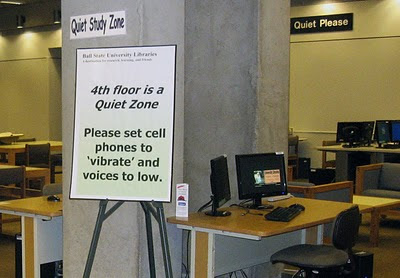
 Bracken Library student assistants (and some full-time staff) have been busy for weeks moving the Music Collection print resources to the 4th floor in preparation for Lower Level recarpeting. All the MLs are now on the 4th floor, and the MTs are almost all there. The last books to be moved will be the reference collection.
To get to the temporary location:
- Where you used to go down, go up!
- Where you used to turn left, turn right!
- Where you used to turn right, turn left!
Then you should start to see some signs!
 |  |
...and remember shhhhhhhh The 4th Floor is a Quiet Zone. No singing!!!
Thursday, June 3, 2010
Update: The Scores are now all on the 4th Floor!
All the scores (a.k.a. sheet music) have now been moved to the Fourth Floor. These are identified by call numbers beginning with the letter "M," followed by a number (vs. ML, which are books). The regular-sized scores are at the beginning, followed by the Oversized items and then the miniature scores. CardCat indicates whether a score is Oversized or Miniature in the detailed view under "material:"

****** As always, feel free to ask for assistance. ******
****** We are happy to help. ******
Tuesday, June 1, 2010
June: Gay and Lesbian Pride Month
 What began as a single day of pride commemorating the Stonewall Riots of 1969 that sparked the Gay Liberation Movement has grown to a whole month: In 2000, June was designated an official month of celebration and memorials.
Music wasn't as integral to this movement as it was to the Civil Rights movement, but the movement did impact scholarship and creativity in music. Long-dead composers whose private lives remained private have been "outed" and some living musicians have declared their sexual orientation publicly.
"Queer" theory has played a role in recent music scholarship, and sexual identity has become a topic of scholarly inquiry in music:
Queering the pitch: the new gay and lesbian musicology
ML 55 .Q44 1994
Queer Noises: Male and Female Homosexuality in Twentieth Century Music by John Gill
ML 63 .G49 1995
Songs in Black and lavender : race, sexual politics, and women's music, by Eileen Hayes
ML 82 .H42 2010

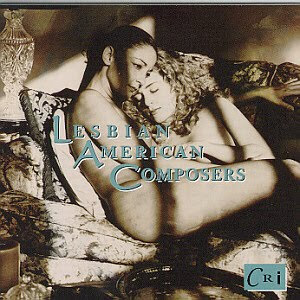 Several of the Twentieth Century's top composers were gay. You can hear the variety of styles they represented on Compact Disc 4419, Gay American Composers and Compact Disc 4904, Lesbian American Composers
Friday, May 28, 2010
Songs for Racing Fans
The Indy 500 is two days and 70 miles away. Here are some song suggestions to set the tone:
One of the best known early car songs comes from the 1930s: "Terraplane Blues" by Robert Johnson Nobody remembers the car anymore, but Robert Johnson is still revered as possibly the best blues artist ever recorded, and this song is one of his signature songs. |  1935 Hudson Terraplane |
| From the 1950s: Chuck Berry, No Particular Place to Go From the 1960s: Beach Boys: 409, Fun Fun Fun, and Little Deuce COupe Jan & Dean: Dead Man's Curve Ronny & the Daytonas Little G.T.O. |  1961 Chevy Impala 409 |
| From The 1970s:Commander Cody and his Lost Planet Airmen: Hot Rod Lincoln Janis Joplin: Mercedes Benz War: Low Rider Blackfoot: The Highway Song |  Low Rider Car Low Rider Car |
From the 1980s & later: Gary Numan: Cars Queen I'm in Love with My Car Bruce Springsteen's Cadillac Ranch Or you could just check out the music of The Cars. | |
| For fun reading, check out this list of the 100 Greatest Car Songs. | |
Tuesday, May 25, 2010
We're Moving!!! (Temporarily)
Due to an upcoming carpeting project, Music Collection materials and equipment are being moved around. Services will continue as usual throughout the summer, but we may have to do some creative work-arounds. Please bear with us!
| Some of the audio listening carrels have been dismantled, but you can still use other listening carrels (behind the glass wall) for reserve listening. Just ask at the service counter if you have any questions. |  |
 | Books and scores are already being moved to their temporary quarters on the fourth floor. The M2s and M3s are already there! Check for them in the Northeast corner of the Fourth Floor, just past group study rooms 409 and 410. |
Research Help by Appointment

If you missed out on last week's research refresher sessions, you can still brush up on your research skills with a one-on-one research consultation. I can help you get started on your term paper research or direct you to more fruitful sources if you've gotten stuck. Summer goes by so fast! Don't let rusty library skills delay your term paper research!
Contact me to set up a time to meet and I'll be happy to help you. 765-285-5065 BSUMusicLibn on AIM |  |
Wednesday, May 19, 2010
Wedding Music
 Planning your wedding? Planning someone else's wedding? Playing a "gig" at a stranger's wedding? The Music Collection has songbooks and recordings to help you get ready for the big day. Musicians & the happy couple can work together to find just the right pieces for the big event.
Check out compact discs of wedding music to hear the common & uncommon selections that you might want your guests to hear. Then the musicians can check out Sheet music (score) selections of wedding music including both secular and religious songbooks. The music collection has music for organ, string quartet, brass quintet, and of course, singers.
 If you are a pianist, you might want to consult Maurice Hinson's Classical music for the Wedding Service: Piano Literature Appropriate for the Wedding Service.
The Chamber Music Finder can help you search the catalog for sheet music for specific ensemble types. If you want music for an unusual grouping, such as clarinet, viola, and piano, you can find it there! Just indicate the instrument and number of players using the instrument, and click "search!" You can also type "wedding" into the keyword box to specify music for weddings.
Monday, May 17, 2010
Music Refresher Workshops this week

I'll be holding music research refresher workshops in Bracken Library 009 (Computer Instruction Room) during the first week of Summer Session at the following times:
| Monday | 3:00 p.m. |
| Tuesday | 5:00 p.m. |
| Wednesday | 2:00 p.m. |
If you can't come to one of these sessions, call the Music Collection (765-285-8188) to set up an individual reference appointment or send me an e-mail at the address below:
 |  |
Tuesday, May 4, 2010
Summer Session 2010

Happy Summer everyone!
The Music Collection & staff are ready to help you with your course and entertainment needs this summer. New books, scores, and compact discs arrive daily.
The Music Collection hours for Summer Session are the same as those for Bracken Library:
| Monday-Thursday | 7:00 a.m. – 3:00 a.m. |
| Friday | 7:00 a.m. – 9:00 p.m. |
| Saturday | 9:00 a.m. – 6:30 p.m. |
| Sunday | 10:00 a.m. – 3:00 a.m. |
Monday, May 3, 2010
Cinco de Mayo - celebrate with music!
 Though not the official national day of Mexico (which is September 16), May 5th, or "Cinco de Mayo" (pronounced Sink-o day My-o) is a day for Mexican-Americans and Mexicans to celebrate their cultural heritage. People mark the day with celebrations with parties and cultural events. The date has become so popular that you no longer need to be Mexican to take part. Like St. Patrick's Day and Oktoberfest, everyone can be Mexican on May 5th.
The most popular Mexican-American/Mexican music style for celebrations is Mariachi (pronounced Marr - ee - ah - chee). In this genre, performers in oversized hats and matching costumes entertain with love songs and sometimes other topics. The groups use only acoustic instruments, including violins, trumpets, guitars, a large guitar with a deep sound (bajo sexto) and sometimes other instruments, such as the folk harp or accordian.
 Bands can have as few as four members but some have over twenty. Traditionally, mariachi groups have been all-male, but women are increasingly active, either in mixed-sex groups or all-women ensembles such as the Mariachi Reyna de Los Angeles (left).
The mariachi band is often the highlight of weddings and quinceñeras (birthday party for a 15-year-old girl) but can be called on for every type of celebration. And of course, they often perform in Mexican restaurants.
The Music Collection has mariachi music that you can check out for your Cinco de Mayo party.
Wednesday, April 28, 2010
Jazz Appreciation Month: Vocalists
 Jazz began as an instrumental form, with the combos of New Orleans jazz. During the Swing Era some big bands moved from being primarily instrumental dance bands to bands that backed vocalists, drawing from the popular song traditions of Tin Pan Alley. This became more common during World War II, as radio entertained the troops (who of course might not be dancing). The band was still usually named for the instrumentalist who led the band, and several singers might perform with the band. A few of the singers who fronted these bands became stars in their own right, continuing to sing after Big Bands died out: Frank Sinatra, Bing Crosby, Mel Tormé, Rosemary Clooney, Carmen McRae, Anita O'Day, Pearl Bailey, and Doris Day.
  |  |
Women:
Currently active singers: | Men:
 |
| Vocal groups: | |
| Manhattan Transfer Andews Sisters Mills Brothers |  |


Tuesday, April 20, 2010
Jazz Appreciation Month: Percussion
 Drums are essential to African music, and as a style with origins in African-American aesthetics, it's natural that drums would be essential to jazz. There are many kinds of drums and many types of struck instruments that make up the "percussion" section of a jazz group.
 The classic drumset consists of a bass drum (sideways), a snare drum, a second drum with a deeper sound (tom), and cymbals on a stand. The drummer can add an almost unlimited number of drums, cymbals and smaller instruments to the set-up. These small instruments can be common sounds such as cowbell, or exotic sounds from almost any culture of the world.
The drummer traditionally sits at the back of the jazz ensemble, but could sometimes be heard as a soloist. During the Swing Era, many drummers had their turn in the limelight. One of the first big stars of the drumset was Gene Krupa (above) who got his start with the Benny Goodman Orchestra, then went on to lead his own group. He was followed by Buddy Rich, who started his career as a small child in the 1920s, then led his own band and gained national recognition through television appearances, staying active well into the 1980s.
Most of the best drummers have appeared as "sidemen" accompanying soloists as part of the standard jazz rhythm section (guitar or piano, bass, and drums). Because of this, it's difficult to categorize drummers by style. The drumset is the backbone of all the styles, but different parts will be featured. For example, "cool" or West Coast jazz drummers use "brushes" on cymbals for a distinct, soft tone. In Latin-influenced groups hand percussion such as maracas may be more prominent. Many drummers have led long careers spanning styles and adapted to different circumstances. The following is a rough breakdown: Big Band percussionists:
- Lionel Hampton (vibraphone)
- Louis Bellson(Count Basie Orchestra).
- Mel Lewis (Stan Kenton, Thad Jones/Mel Lewis Big Band)
- Ed Shaughnessy (Benny Goodman, Tommy Dorsey, Count Basie, Tonight Show Orchestra)

- Max Roach (with many of bop's greatest stars),
Ed Thigpen (as part of many groups organized by Norman Granz for the Verve label) - Art Taylor (with John Coltrane and others)
- Art Blakey with the Jazz Messengers
- Elvin Jones (with John Coltrane and others)
Cool jazz drummers:
- Shelly Manne
- Joe Morello (Dave Brubeck)
Fusion:

- Airto (Moreira), with Weather Report,
- Billy Cobham (Mahavishnu Orchestra, New York Jazz Quartet),
- Danny Gottleib (Mahavishnu Orchestra, Pat Metheny Group),
- Dave Weckl (with Chick Corea and his own band),
- Jack DeJohnette (one of the hardest working drummers in jazz! He has also put together an instructional DVD: "Musical Expression on the Drumset)
- Bill Bruford (played in both rock bands - Genesis - and jazz)
- Cal Tjader (Latin jazz)
- Chico Hamilton defies definition. He has played with big bands (Duke Ellington, Count Basie) but also with Dexter Gordon and others in smaller venues through the decades.
Subscribe to:
Posts (Atom)