Tuesday, February 19, 2013

Black History Month: 20th Century Composers


David Baker
David Baker (b. 1931) is an Indianapolis native who composes in a symphonic-jazz idiom.  He teaches at Indiana University.

Margaret Bonds (1913 - 1972) collaborated with poet Langston Hughes to creat art songs and settings for voice and orchestra.  She also composed for the stage.


Leo Brouwer (b. 1935) is a Cuban composer of African descent who has composed music for guitar and film music.

Ulysses Kay (1917 - 1995) composed in a Neo-Classical style and taught composition at the City University of New York.

Undine Smith Moore
Undine Smith Moore (1904 - 1989), known as the "Dean of Black Women Composers," she composed in a variety of genres but is best known for her choral works.

Zenobia Powell Perry (1908 - 2004) composed in many vocal and instrumental genres.  She taught for many years at Wilberforce University in Ohio (near Dayton), the first university owned by blacks.

Hale Smith (1925 - 2009) composed mainly instrumental music, sometimes incorporating jazz and other African-American idioms.

Howard Swanson (1907 - 1978) is best known for his songs, especially settings of poetry by his friend, Langston Hughes.

Olly Wilson
George Walker (1922 - 2012) won the 1996 Pulitzer Prize for his work, Lilacs, which sets a Walt Whitman poem for voice and orchestra.

Olly Wilson (b. 1937) is professor emeritus at the University of California, Berkeley, where he taught for over thirty years.  His works reflect the diversity of his interests, including electro-acoustic music, jazz and West African music.


For more information on African-American composers:
International Dictionary of Black Composers,
edited by Samuel A. Floyd, Jr. 

From Spirituals to Symphonies: African-American Women Composers and their Music, by Helen Walker-Hill 

The Music of Black Americans: A History, by Eileen Southern (3rd edition) 

Racial Uplift and American Music, 1878-1943, by Lawrence Schenbeck.

CardCat Subject Search:


Monday, February 11, 2013

Grammy Winners in the Music Collection

Congratulations to the hard-working musicians who won Grammy Awards last night.  The Music Collection includes the best music from every genre or style.  Check out these winners:

Black History Month: Classical Music and the Harlem Renaissance

The Harlem Renaissance of the 1920s and beyond was known primarily as a literary movement, but also encompassed the visual arts and music.  The goal of the movement was to venerate Afro-centric themes and artistic styles within art forms developed in Western Europe.  In the visual arts, African design was a main element, but African-American scenes were also depicted.  (Romare Bearden and Jacob Lawrence exemplify the movement in painting)  The most famous poet of the movement was Langston Hughes.

In 1918, R. Nathaniel Dett, composer and vocal music director at the historically black college, The Hampton Institute, published an article titled The Emancipation of Negro Music, in which he expressed the mixed feelings of a black classical composer attempting to incorporate African-American music within European art forms.  Although he was not part of the Harlem Renaissance per se, his work embodied its goals.


His generation was far enough removed from slavery to have been impacted more by the Reconstruction and other post-war influences.   There were two competing visions of the music of black Americans.  One, embodied by minstrelsy, consisted of white people with black make-up ("blackface")


The second, exemplified by The Fisk Jubilee Singers, an accomplished choir that sang spirituals on concert tours to the Northern United States and Europe, promoted the spiritual as a true art form, and sought to elevate the position of black artists in general.  Singer and arranger Harry T. Burleigh  (1866 - 1949) published art song versions of many spirituals, and he helped spread their popularity indirectly, by singing them for composer Antonin Dvorak.

Alain Locke (1885 - 1954) was the primary philosopher of the Harlem Renaissance (he called it "The Negro Renaissance).  A Rhodes Scholar who earned a Ph.D. in philosophy at Harvard, he encouraged writers and artists of African descent to embrace African and African-American themes in their art.  To that end he edited an athology of poetry, fiction, and essays titled The New Negro: An Interpretation, published in 1925. 

Locke contributed an essay about spirituals, and there are references to music throughout the book. Locke cites American Negro Songs and Spirituals, a collection compiled by John Work, and discusses the work of the Fisk Jubilee Singers and other choirs from black colleges to dignify the genre.  Although jazz is today the musical style associated with Harlem of the 1920s, Locke encouraged composers to use spirituals as their inspiration.  He would later write a whole book on The New Negro and His Music.


The New Negro includes a poem by Langston Hughes, titled "Minstrel Man."  It echoes Dett's feelings about minstrely with the beginning stanza:

Because my mouth
Is wide with laughter
And my throat
Is deep with song,
You do not think
I suffer after
I have held my pain
So long.
p. 144
An example of blacks as portrayed in blackface minstrelsy


Florence Price (1887 - 1953) lived in Little Rock and then Chicago.  Despite never living in Harlem, her works embody the spirit of the Harlem Renaissance.  She drew on themes from African-American life, and especially religious music.  She was the first black female classical composer of the United States.  Her works were performed by many revered musicians, including The Chicago Symphony and Marian Anderson.


William Grant Still, (1898 - 1975) belonged to a later generation, and he was not part of the circle of artists and thinkers of the Harlem Renaissance despite living in New York.  After graduation from Oberlin College, he performed in the popular music styles of the day.  Later he achieved success with his classical compositions, including his best-known work, the Afro-American Symphony, which incorporates both spirituals and popular music idioms.  He composed in every classical form, and although he frequently referenced African-American or African themes, they were only some of the many inspirations that influenced his works.

Cardcat links:
Music of Harry T. Burleigh
Music of R. Nathaniel Dett
Music of Florence Price
Writings and Music of William Grant Still


Monday, February 4, 2013

Black History Month: Music in the 19th Century

Slave culture of the American South famously gave rise to diverse genres of song, from field hollars to spirituals.  In other areas, men (mostly) of color in both Europe and the Americas cultivated European music throughout the century.  A few rose to prominence as performers and composers:

"Blind Tom" Wiggins (1849 - 1908) was a child prodigy born into slavery, who learned to play the plantation owner's piano.  He concertized from the age of eight, though more a curiosity than an artist to his audiences.  The plantation owner, General Bethune was his manager for much of his life.  He may have been a savant, having the ability to reproduce a piece he had heard only once.  He toured the United States and Europe, and in his twenties began to compose (though he published under pseudonyms).  He was the first African-American musician to perform at the White House, in 1860.  You can find some of his published music, such as The Battle of Manassas, online at the Library of Congress.  To mimic the sound of cannons, Tom used the flat of his left hand, a technique that would not be used by other composers until fifty years later.
(Read more: links to CardCat)

Samuel Coleridge-Taylor (1875 - 1912) was born to an English mother and a Creole father from Sierra Leone.  His mother's family encouraged him in music, and he studied at the prestigious Royal College of Music.  His best-known work is the cantata, The Song of Hiawatha, one of several works he composed on the theme of Hiawatha.  (He also named one of his children Hiawatha!)  Though he lived in England, he was influenced by African-American leaders of his day and by the Fisk Jubilee Singers.  He made it his mission to ennoble the black man through his music.  His best known works in that vein are 24 Negro Melodies, Op. 59 (for piano) and his African Suite, Op. 35 (for orchestra).

Read more: links to CardCat; Oxford Music Online biography (log-in required).  Listen online at Naxos Music Library (log-in required)


Friday, February 1, 2013

Black History Month: Music in the 18th Century

Although a tiny minority of classical musicians even today are of African descent, there have been many outstanding musicians over the centuries. 

In the Eighteenth Century, the most well known was Joseph Bologne Chevalier de Saint-Georges (1745 - 1799).  His father was a planter on the Caribbean island, Guadeloupe, and his mother a slave.  The family moved to France in 1853 and he acquired a first-class education.  Known today as the Black Mozart (Le Mozart Noir), he was active as a violinist, conductor, and composer in Paris.  He composed symphonies, concertos, sinfonia concertantes (concertos for more than one instrument), and operas.  It was he who commissioned Haydn's Paris Symphonies.

Compact Discs
Le Mozart Noir: Compact Disc 18099

Six String Quartets, opus 1: Compact Disc 8553

Violin Concerto in A Major, op. 5, no. 2:  Compact Disc 4910

Scores
Performance parts for his violin concertos and two symphonies:  M2 .M2584 v. 3

More information:
His biography:  Joseph Boulogne, called Chevalier Saint-Georges by Emil F. Smidak:
DC 137.5 .S35 S56 1996

Article (with list of works and bibliography) in Grove Music via Oxford Music Online.


Thursday, January 24, 2013

Musicians of the Civil Rights Era

The 1950s-1960s are the years known for the Civil Rights movement as exemplified in the actions of Rosa Parks, Dr. Martin Luther King, Jr., tragic events such as the murder of civil rights workers in Mississippi, and landmark legal cases such as Brown vs. the Board of Education.

Many musicians contributed to the effort, even before the movement gained ground:

Marian Anderson (1897-1993).  A gifted contralto singer, Marian Anderson was denied the right to perform at the Daughters of the American Revolution Hall in Washington, D.C.   First Lady Eleanor Roosevelt stepped in and arranged for her to perform on the steps of the Lincoln Memorial instead.  75,000 people heard her sing classical arias, African-American spirituals, and patriotic songs.  The event and the reason for its relocation would inspire countless others, including Dr. Martin Luther King, Jr.  Later, she became Ambassador for Human Rights to the United Nations.

Paul Robeson (1898 - 1976) was an activist as well as a world-renowned singer and actor.  Russia was the only place where he felt welcomed without regard to his race, and this experience inspired him to embrace Communism and its egalitarian principles.  He fought colonialism in Africa and Australia, but did not participate in the American civil rights struggle.

Billie Holiday (1915 - 1959) was a very popular blues and jazz singer who called attention to racism as exemplified by the practice of lynching with her song, "Strange Fruit."  The lyrics were inspired by a New York teacher who was appalled by the 1930 photograph of two men who had been lynched in Marion, Indiana.

Hazel Scott (1920 - 1981) was a pianist and singer who was comfortable in both classical and jazz styles.   In 1950 she briefly hosted her own television show but McCarthyism and racism threatened her career. She moved to France to pursue her career during the 1950s and early 1960s, though she was always a vocal advocate of civil rights.

Coretta Scott King (1927 - 2006) met Martin Luther King, Jr. while they were both graduate students in Boston.  He was working toward a Ph.D. in theology; she was perfecting her singing at the New England Conservatory of Music.  Though she took on the roles of wife, mother and civil rights activist, she used her talent to further the movement by giving a series of "Freedom Concerts."

Harry Belafonte (b. 1927) achieved fame in the 1950s with his Caribbean calypso hits, such as "Day-O."  He provided financial and moral support to the civil rights movement and was close to the King family.   Later he was a co-organizer of "We Are The World," a fund-raising concert for Africa.

Motown Records, the label that promoted popular African American musical artists began releasing songs that expressed views on civil rights in the 1970s.  The most famous of these was Marvin Gaye's "What's going on?"

Tuesday, January 22, 2013

The Civil Rights Movement in Song


Dr. Martin Luther King, foremost leader of the civil rights movement, learned piano as a child and was a music lover throughout his life. His favorite songs were spirituals, composed and sung by slaves to keep up their spirits. He found inspiration in the lyrics and quoted them often. The most famous quotation was from the spiritual, "Free at Last."


Coretta Scott King, wife of Dr. Martin Luther King, Jr., trained as a classical singer and used her talent to help raise funds for the civil rights movement in a series of "Freedom Concerts."  She was as committed to peace and equality as her husband, and continued to be an activist after his death.  In her authobiography she talks about her husband's fondness for spirituals.
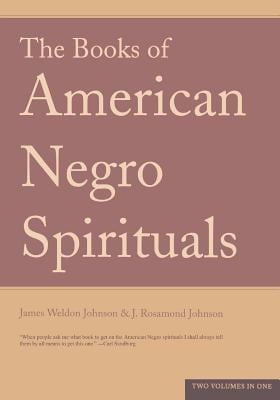
Brothers James Weldon Johnson and John Rosamund Johnson  published the Books of American Negro Spirituals, songs collected from former slaves.  It is due to their efforts that many spirituals  continued to be sung throughout the Twentieth Century.  They also composed the words and music for "Lift Ev'ry Voice and Sing," a hymn that became known as the "Negro National Anthem."   Although the words originally commemmorated the memory of Abraham Lincoln, they took on new meaning as African-Americans marched for their freedom in the 1950s and 1960s:

Lift every voice and sing, till earth and Heaven ring,
Ring with the harmonies of liberty;
Let our rejoicing rise, high as the listening skies,
Let it resound loud as the rolling sea.
Sing a song full of the faith that the dark past has taught us,
Sing a song full of the hope that the present has brought us;
Facing the rising sun of our new day begun,
Let us march on till victory is won

Themes from the civil rights movement permeated the popular song culture of the 1960s. One famous song was "A Change is Gonna Come," an anthem of hope composed and sung by Sam Cooke.  The song ends with the words, "It's been a long time coming, but I know a change is gonna come."  Several singers have covered the song in the years since the original 1964 release.

In addition to the books and scores (songbooks) above, check out CDs of Civil Rights music from the Music Collection.

Wednesday, December 19, 2012

Christmas Music in the Music Collection

After a long semester and seemingly endless Finals Week you may want to kick back with some holiday music.  For compact discs to check out, go to CardCat's advanced search, select "Compact Discs, audio" as the format, and then type the holiday of your choice.  The Music Collection has over 250 CDs of Christmas music and several CDs of music for Hannukah and Solstice celebrations.

For something different, try out these non-traditional Christmas selections:
Christmas Comes Alive, by the Brian Setzer Orchestra
A Christmas Gift for You from Phil Spector
A Soulful Christmas, with classic R&B artists
The Temptations Christmas Card
This is Christmas, Luther Vandross
December, by the Moody Blues
A Smooth Jazz Christmas, by Dave Koz and friends
A Motown Christmas
Nuncrackers, the Nunsense Christmas Musical
Merry Texas Christmas, y'all, by Asleep at the Wheel
Christmas Island, by Jimmy Buffett
Merry Christmas, by Mariah Carey
Billboard Greatest Christmas Hits, 1955-1989
Dr. Demento Presents the Greatest Christmas Novelty CD of All-Time


If you are already out of town, you can use your Ball State username and password to listen to Naxos Music Library's Christmas music playlist, a selection of classic and classical Christmas favorites.  (Log-in with Ball State user ID and password required off-campus)


Friday, December 7, 2012

Happy Hannukah from the Music Collection!

Hannukah music is part of the celebration of the season, and Jewish musicians (and even some non-Jews) have brought imagination and whimsy to this special time of year.  Try these CDs in the Music Collection:

Yeshiva Boys Choir' Hanukkah (or Chanukah) album:
Compact Disc 20790


 The LeeVees, and their rockin' take on the holidays:
Compact Disc 21103

The Klezmer Conservatory Band (there really isn't a
conservatory for klezmer!) offers up "Oy Chanukah!"
Compact Disc 18159

A Child's Hanukkah, by the Jewish Wedding Band:
Compact Disc 19275 

For something more reverent, try "Lights: Music for Chanukah"
by the Zamir Chorale of Boston:
Compact Disc 13531

If you'd rather make your own Hanukkah music, The Music Collection has song books, such as Jewish Holidays in Song by Velvel Pasternak.  (Call Number: M 2187 .H65 1997) and Hebrew Holidays and Folk Songscompiled by Rene and David Karp.  (Call Number: M 1850 .H43 2009) 


Tuesday, October 23, 2012

K-Pop in the Music Collection


CDs in the Music Collection
The Music Collection has Korean popular music (K-Pop) in addition to popular music from around the world.  K-Pop is of recent interest because the video of "Gangnam Style" by PSY went viral.  Even before that, K-Pop had been increasingly popular in Asia and gaining a foothold in the United States especially with young audiences.  Billboard Magazine recently added K-Pop to its online series of popular music charts, the only style from outside of the Western Hemisphere (Latin American music has been a staple for years) to be tracked by the music media giant.

To search for Korean popular music, go to the Media Finder for non-Classical Music.  You can search for the style (rock, rap, etc.) and then select Korea as the country:

You can also search for an artist or band by using CardCat and searching for him/her/them as an "author."

PSY's album, with inserts for each song (in Korean)


Monday, October 1, 2012

Happy Birthday, Compact Disc!

30 years ago today the first CD player and commercial CD recording were released.  The CD player was by Sony and the CD was 52nd Street, by Billy Joel, also a Sony release.
52nd Street was originally issued as an LP in 1978 and proved to be a big seller for Sony.  Hit songs included "Big Shot," "Honesty," and "My Life."

The CD was meant to be indestructable, at least compared to the LP, which was easily scratched or warped.  As music librarians have come to learn, that promise was exaggerated just a bit, but it's true that it has proven to be a very durable format for recordings.  The Ball State Music Collection has over 17,000 CD titles, representing well over 20,000 individual discs.  Unlike many other formats that have come and gone, you can still borrow a CD and listen to it at the library or at home.  Use the keywords "and compact" with any other search terms, or select "Compact Disc, audio" as the format in Advanced Search in CardCat.

Read more in The Atlantic Monthly.


Tuesday, September 11, 2012

Music of Mourning

Music accompanies and portrays all human emotions, so it's no surprise that the world's most beautiful music has been composed to honor the memory of the departed.  From the Ancient Greeks to the present, some of the most enduring works of European art music have been associated with mourning.  The Requiem is the Catholic Mass for the Dead but many composers' versions have become popular for their emotional range, for example, Verdi's famous Requiem.

On September 11, we honor the memory of those lives lost in New York, Arlington, and Pennsylvania on September 11, 2001. Many works of music have been composed to commemorate the day, but perhaps the most eloquent is On the Transmigration of Souls, by American composer John Adams.  Transmigration is a Buddhist concept, meaning the separation of the soul from its body and subsequent travel to either a type of Hell or to a new life.

In this work, a child speaks the names of the people lost as the chorus intones some of the messages on flyers posted in the city as people searched for their missing loved ones.  It premiered on September 19, 2002 for the anniversary of 9/11, in a performance by the New York Philharmonic Orchestra, which commissioned the piece.  Later, it won the 2003 Pulitzer Prize for Music.

Check out the Music Collection's CD recording, or listen to the piece on Naxos Music Online (Ball State log-in required)

Friday, July 13, 2012

New Operas on DVD

The Educational Resources Collection includes almost 200 operas on DVD, most with subtitles in English to help you follow the plot.  Among the recent editions are some of the latest interpretations by today's stars:

La Clemenza di Tito, one of Mozart's historical operas based on a text by Metastasio.  Starring Elena Garança and Barbara Bonney among others, it was filmed live at the Salzburg Festival in 2003.
DVD Video 10089

La Traviata, Puccini's famous tale of a ill-fated courtesan (a.k.a. prostitute) and the man who loves her.
DVD Video 10090


Elektra, the tragic opera by Richard Strauss, about a woman obsessed with the death of her father.  Recorded in Salzburg in 2010.

Tosca, Puccini's tragic tale of star-crossed lovers.  (Zurich, 2009) 
DVD Video 10083


Die Zauberflote (The Magic Flute), Mozart's masterpiece, featuring the famous "Queen of the Night" aria.  This production was filmed at the famous La Scala theatre.

Anna Nicole, an opera about a more recent tragic story, composed by Mark-Anthony Turnage.

The Rake's Progress.  This opera by Igor Stravinsky turns the genre on its head and features a man of ill-repute who meets a tragic end, rather than a woman.

American superstar Renee Fleming stars in Armida, set during the Crusades.  This production was broadcast live from the Metropolitan Opera House to movie theatres around the country.


Tuesday, July 3, 2012

Music for 4th of July

Celebrate the holiday with a variety of songs streamed from Naxos Music Library (log on required from off-campus):


Or search the word "patriotic" as a keyword to find other selections.  Naxos Music Library includes over a million tracks of classical and classic music to stream to your computer.

Monday, June 4, 2012

Flag Day

June 14 is Flag Day, the official commemoration of the adoption of the stars and stripes as the United States national symbol.  Many songs celebrate the flag, the most famous of which are "You're a Grand Old Flag,: and "The Stars and Stripes Forever" by John Philip Sousa.

Of course the most famous song about the flag is The Star-Spangled Banner, which dates from 1814.  The words are by Francis Scott Key, but did you know that the song was originally a drinking song?  One of the Music Collection's song books has both versions.  Check them out below.  (Note that the first two notes of the melody were different a hundred years ago, when the book was published).  Although well known almost immediately, it was not offically declared the national song until 1931.

The song you know:


The original song:


New Books, Scores & CDs received in May

You can find a list of the new books & scores here and a list of the new CDs here. If a score or book is still at the bindery, you can still place a hold/recall request on it. Simply log into CardCat and look it up, then you'll see "Hold/Recall Request" to the left of the full item description.
 
There is one new music DVD in the Educational Resources Collection: Jazz on a Summer's Day. Filmed at the Newport Jazz Festival in 1958, it features classic performances by iconic musicians such as Louis Armstrong, Mahalia Jackson, Dinah Washington, Thelonious MOnk, George Shearing and many, many others. It is the first true "concert film," and a classic documentary.

Monday, May 21, 2012

Billboard Award-Winning Albums in the Music Collection

The annual Billboard Awards honored artists, songs, and albums of merit from the past year.  Most of the winning albums and artists are available in the Music Collection.  Just click on the links to go to the CardCat listing for the artist or album:


  • Adele's "21" was the big winner:  Top Artist, Top Billboard 200 Album, Top Female Artist, Top Hot 100 Artist, Top Billboard 200 Artist, Top Digital Songs Artist, Top Radio Songs Artist, Top Digital Media Artist, Top Pop Artist, Top Pop Album, Top Streaming Song, Top Alternative Song


  • Other winners:

  • LMFAO:  Top Hot 100 Song, Top Duo/Group, Top Digital Song, Top Pop Song, Top Dance Song, Top Rap Song
  • Coldplay: Top Rock Artist, Top Alternative Artist, Top Rock Album, Top Alternative Album
  • Foster the People:  Top Rock Song
  • Wiz Khalifa:  Top New Artist,
  • Lil Wayne: Top Male Artist, Top Rap Artist, Top Rap Album
  • Lady Gaga: Top Dance Artist, Top Dance Album
  • U2: Top Touring Artist
  • Lady Antebellum: Top Country Artist
  • Justin Bieber: Top Social Artist
  • Rihanna: Top Streaming Artist
  • Shakira: Top Latin Artist
  • Nicki Minaj: Top Streaming Song (Video)

    • ...and many of the nominated artists and albums are available as well:

      Michael Bublé
      The Black Eyed Peas
      Bad Meets Evil
      Scotty McCreery
      Bon Jovi
      Taylor Swift
      Beyoncé
      Foo Fighters
      The Black Keys
      Mumford & Sons
      Eminem
      The Band Perry
      David Guetta
      Britney Spears
      Jay-Z & Kanye West
      Nickelback
      Maná


      Thursday, April 5, 2012

      Jazz Appreciation Month: Jazz in the Movies

      Hallelujah (1929) -- the story of a cotton farmer, with music by Irving Berlin.  The DVD includes two musical shorts. Directed by King Vidor.
      DVD Video 7079

      Blues in the Night (1941) -- story about a jazz band on the road, starring Jimmy Lunceford and his orchestra.
      DVD Video 7210

      Cabin in the Sky (1943) -- Southern black version of "Faust" legend with music by Duke Ellington.  Features Ethel Waters, Lena Horne and Louis Armstrong.
      DVD Video 7080

      Stormy Weather (1943) -- includes the dance routine by the Nicholas Brothers that Fred Astaire described as the "best filmed dance sequence ever."  Also featuring Lena Horne, and the Cab Calloway big band.
      DVD Video 6313

      Birth of the Blues (1946) -- a story about Dixieland jazz, featuring trombonist Jack Teagarden.  The DVD includes Blue Skies (1941), with music by Irving Berlin.
      DVD Video 6337

      Anatomy of a Murder (1959) -- Otto Preminger film starring Jimmy Stewart, with music by Duke Ellington.
      DVD Video 267

      'Round Midnight (1968) -- stars saxophonist Dexter Gordon as a troubled sax player.  The film score is by Herbie Hancock.
      DVD 6687

      Buena Vista Social Club (1999) -- documentary about musicians in Havana
      DVD Video 413

      Sweet and Lowdown (2004) -- about the conflict between acoustic and electrified jazz.  Music by Dick Hyman
      DVD Video 2052

      These videos are available from the Educational Resources Collections.