Thursday, May 30, 2013

Jewish American Composers for the Stage and Screen

American popular music owes much to the music of Broadway, and then later to the film industry, and these genres owe a huge debt to Jewish American composers, past and present.  From the 1910s to the 2010s, Jewish composers have been shaping the theatrical experience behind-the-scenes.  Even with major "talent" in the footlights, the music is the true star of the Broadway musical, and in some cases the music of film.  What would Hitchcock's "Psycho" be without the screeching of violins in the famous shower scene?

Jerome Kern (1885-1945) composed the music for Show Boat (1927), one of the first true musicals of Broadway, and one of the first musicals translated to the big screen (1936).  The show's most famous song, Old Man River, was sung by Paul Robeson


Irving Berlin (1888-1989) was a mature songwriter by the time sound was added to motion pictures, so he naturally became one of the first composers for films.  He also wrote the lyrics for many of his songs.  His film musicals include hits such as Top Hat, Easter Parade and Holiday Inn, which features one of his biggest hits, White Christmas.


Erich Wolfgang Korngold (1897-1957) began his career as a classical composer in the romantic style, then composed for many films, and ended his career as a concert composer.  Coming to the U.S. to compose music for The Adventures of Robin Hood, starring Errol Flynn, saved him from Nazi aggression in Austria.  He remained in the U.S. and became a citizen in 1943. He won an Academy Award for best film score for the film.


Harold Arlen (1905-1986), the son of a cantor, was the genius behind the music for The Wizard of Oz and seven of the songs for A Star is Born (1954), also with Judy Garland.


Bernard Herrmann (1911-1975) collaborated with Alfred Hitchcock on such classic films as
  • The Man Who Knew Too Much
  • North by Northwest
  • Psycho
  • Vertigo
  • He also composed the music for Citizen Kane, Cape Fear, and Fahrenheit 451.

    Leonard Bernstein (1918-1990) is known primarily for his years conducting the New York Philharmonic Orchestra, but he also composed the music for one of the most iconic stories of Broadway and film, West Side Story.


    Elmer Bernstein (1922-2004, no relation to Leonard Bernstein) was a prolific composer of diverse film scores, including Cecile B. DeMille's The Ten Commandments, The Magnificent Seven, To Kill a Mockingbird, True Grit, My Left Foot, and Airplane!, as well as some television music and the classic short film, Toccata for Toy Trains.


    Stephen Sondheim (1930-) is one of the most successful musical theatre composers of recent times.  He wrote the lyrics for West Side Story, and he wrote both lyrics and music for the following: 

    Alan Menken composed the music for some of Disney's most recent films as well as several others.  His hits include Sister Act and Little Shop of Horrors (also for Broadway) and for Disney: Aladdin, Pocahontas, The Hunchback of Notre Dame, and Beauty and the Beast

     Stephen Schwartz has written the music and lyrics for such diverse shows as Godspell, Wicked, Pippin and Disney's Pocahontas.


    John Kander and lyricist Fred Ebb, both Jewish, collaborated on some of the best kown modern musicals, including Cabaret.


    Monday, May 20, 2013

    Jewish American History Month: Jews in Jazz

    Jazz is the quintessential American musical form, developed by African Americans in New Orleans and popularized through recording and radio.  Musician of other ethnicities have also contributed to the art, including many Jews:

    Woody Allen, actor, director, and avid amateur jazz clarinetist.  He plays the New York clubs when he's not busy with his film career.

    Herb Alpert, (b. 1935) is a famous trumpet player and crossover artist best known for his hits with the Tijuana Brass (none of whom were Mexican!)

    Brecker Brothers (Randy, b. 1945 and Michael, 1949-2007)  Trumpeter Randy and sax man Michael have been two of the most influential musicians of the late twentieth century and the beginning of the twenty-first.  They have performed with each other as The Brecker Brothers and have collaborated with the leading musicians of our time.

    Harry Connick, Jr. (b. 1967), pianist and crooner, is the son of an Irish-American father and Jewish-American mother.  He won a Grammy award for his work on the soundtrack to When Harry Met Sally, establishing him as America's top jazz vocalist.

    Sammy Davis, Jr., one of the famed "Rat Pack" Las Vegas crooners, converted to Judaism after a near-fatal car wreck.

    Leonard Feather  (1914 - 1994) wrote reference books and was also a performer and songwriter.

    Béla Fleck  (b. 1958), banjo player, is the leader of Béla Fleck and the Flecktones.


    Stan Getz
    Stan Getz, (1927 - 1991), played tenor sax with a suave, cool sound.  His is best known for his Latin-themed recordings including his collaboration with João Gilberto on the song,"The Girl from Ipanema."

    Garry Giddins (b. 1948) is a writer who has covered jazz for decades in The Village Voice.  His books cover all of jazz history and include biographies of great jazz artists.


    Benny Goodman
    Benny Goodman (1909 - 1986) was the leader of the Benny Goodman Orchestra, one of the leading big bands of the 1930s and 1940s.  He was also an accomplished soloist on the clarinet.


    Norman Granz (1918-2001) was an influential producer, who helped the cause of civil rights through jazz.

    
    Nat Hentoff (b. 1925) is a prolific writer about jazz and civil rights.  Well into his 80s, he continues to contribute a column to Jazztimes.  He has written several books and penned the inserts for many recordings.

    Harry James (1916-1983) was the featured trumpet soloist with the Benny Goodman Orchestra and then started his own band with a young Frank Sinatra as his lead singer.  He is still revered today for his impeccable tone and virtuosic technique.

    Kenny G
    Kenny G (b. 1956) is the top-selling jazz instrumentalist of our time.  His soprano sax solos are the epitome of the "smooth jazz" style.  He is also known for his unique off-center embrochure.

    
    Lee Konitz  (b. 1927) has played alto sax as a soloist and with almost every famous jazz musician of the past 60 years.


    Mel Lewis
    
    Mel Lewis (1929 - 1990) was drummer and co-leader of the Thad Jones/Mel Lewis Orchestra, then performed weekly at the Village Vanguard after Jones' departure.
    

    Herbie Mann (1930 -2003) fused jazz with world music, especially Latin rhythms.  He was a popular crossover artist and one of the few artists of any style to perform regularly on the flute.

    Buddy Rich (1917-1987) was one of the best drummers of history, starting out in the big band era and continuing his career as a leader.  He frequently appeared on television during the 1960s and 1970s.

    
    Artie Shaw
    Artie Shaw (1910-2004, born Abraham Arthur Arshawsky) was a clarinetist and bandleader of the Big Band Era who also wrote short stories and studied mathematics.

    Mel Tormé (1925 - 1999) was a singer nicknamed "The Velvet Fog" for his smooth vocal tone.  His best-known song is "The Christmas Song" (Chestnuts Roasting on an Open Fire).

    Paul Whiteman (1890 - 1967) was one of the first bandleaders, leading record sales in the 1920s when bands were still called "dance bands."  His band backed Paul Robeson's famous recording of Ole Man River.


    Friday, May 10, 2013

    May is Jewish American Heritage Month

    What would American music be without the Jewish composers who helped define it?  Many of American's most famous and innovative composers are of Jewish heritage, thought not necessarily religious.  Several were also New Yorkers who both inspired and were inspired by the creativity of the country's largest and most creative city.  Others came to the United States to escape Nazi Germany and the freedom the found here.
    
    Milton Babbitt  (1916 - 2011) Composer of electronic music.  His famous essay, "Who Cares if you Listen," defined the rarified experimentalist atmosphere of midcentury composition within academia.
    
    Leonard Bernstein
    
    Leonard Bernstein's (1918 - 1990) recasting of Shakespeare's Romeo and Juliet as a battle between ethnic groups in New York is the famous West Side Story.  He conducted the New York Philharmonic for many years and appeared in a series of televised Young Peoples Concerts for children.


    Aaron Copland


    Aaron Copland's (1900 - 1990) "Appalachian Spring" is perhaps the quintessential sound of Americana.  He collaborated with dance troupes and frequently conducted his own works with orchestras around the country.


    Jacob Druckman (1928 - 1996) worked in electronic music as early as the 1950s, long before digital audio workstations were a compositional commonplace!

    Morton Feldman (1926 - 1987) is known for his work in indeterminacy, or chance music

    Leo Ornstein (1893 - 2002) was born in Russia then migrated to the Lower East Side.  He pioneered the tone cluster, close-knit groups of notes with a harsher sound than traditional chords.
    Leo Ornstein

    Arnold Schoenberg (1874-1951) was an Austrian Jew who migrated to California when Hitler rose to power in 1933.  His twelve-tone serial technique ushered in a new era of musical aesthetics, and would have been suppressed by the Nazis.  In California he was free to develop it further and teach it to others.  His influence is still felt and heard today.

    Morton Subotnick (1933 - ) was a pioneer of multimedia and electronic music in San Francisco.

    Kurt Weill
    Kurt Weill (1900 - 1950) trained as a classical composer in Germany, and fled to the United States because of Nazi persecution.  He embraced the musical theatre style of his adopted country.

    John Zorn (1953 - ) blends popular music genres with classically-derived forms in experimental music.  He has also composed film scores.

    Monday, April 1, 2013

    April Fools Day!

    In honor of April Fool's Day, check out some of these foolish songs and singers on CD and DVD:

    Stan Freberg Presents the United States of America, a 1961 parody of American History told in Vaudevilian humor and song.  "Take an Indian to Lunch" is a classic.
    Compact Disc 3360

    The Best of Allan Sherman starts with one of the best known novelty songs: Hello Muddah, Hello Fadduh!
    Comapct Disc 18804

    Homer & Jethro: America's Song Butchers
    Folk/country hillbilly humor from 1949 to 1965.  Don't miss "The Battle of Kookamonga!"
    Compact Disc 18764

    An Evening Wasted with Tom Lehrer includes many of the math professor's greatest hits, such as "The Masochism Tango," from 1959.
    Compact Disc 18766

    Tom Lehrer's That was the Year that Was  addresses some of the pressing social issues of the 1960s.
    Compact Disc 18767

    Weird Al Yankovic Poodle Hat
    Weird Al takes on recent hits with songs like "Party at the Leper Colony"
    Compact Disc 21076


    Ray Stevens Laughter is the Best Medicine includes his big hit from the 1970s, "The Streak."
    Compact Disc 18805


    The First Anna Russell Farewell Special
    She just couldn't retire!  Soprano Anna Russell took on silly operettas and the super-serious operas of Richard Wagner.
    DVD Video 5273

    6 Hilarious DVDs of the pianist over the span of his long career
    DVD Video 5787  (Educational Resources Collections)

    P.D.Q. Bach (the pen name of Peter Schikele) takes on Mozart with The Abduction of Figaro
    DVD Video 4380

    Spike Jones is Murdering the Classics features the comedian known for silly sounds in parodies of well known classical works such as the Flight of the Bumble Bee.
    Compact Disc 1739

    Or search these subject categories:

    Tuesday, March 19, 2013

    Women's History Month: The Sopranos


    Leontyne Price
    The soprano range is the highest vocal range.  It is the range of children's voices and women with the highest voice range.  In operas, the most important vocal part is often the soprano role.  She is usually the heroine of the story, often coming to a tragic but well-sung demise.  Famous sopranos of the opera stage have been known as the prima donna (first lady, or most important woman) or "diva," the Italian word for goddess.

    Famous Sopranos of the 20th Century
    • Birgit Nilsson  (1918 - 2005) was a Swedish dramatic soprano best known for her performances in Wagnerian operas and roles requiring similar vocal power, such as Richard Strauss's Elektra
    • Maria Callas (1923 - 1977) American-born Greek soprano whose unique tone and wide range enabled her to sing a wide variety of roles.  She was the most influential singer of the middle of the century.  Her Carmen is classic.
    • Dame Joan Sutherland (1926 -2010)  Her most famous role is Lucia, in Lucia di Lammermoor, especially the final "Mad" scene that pairs Lucia with the orchestra's flutes in imitation of bird songs.
    • Renata Tebaldi (1922 - 2004) was known as much for her powerful lower range as for her splendid high notes. She performed Puccin's Tosca 162 times, 45 of them at the Metropolitan Opera.
    • Leontyne Price (1927 - ) was one of the first African-American performers at the Metropolitan Opera.  She has been a champion of American music, and she sang at Lyndon B. Johnson's state funeral.  Her best-known roles are Verdi's Aida and Il Trovatore
    • Beverly Sills (1929 - 2007) nicknamed "Bubbles," was an American diva who went into management after her retirement from singing.  Her voice encompassed a very wide range yet remained nimble in even the highest register.  She frequently appeared on television, including live opera broadcasts and talk shows.    Many consider her interpretation of Donizetti's Roberto Devereux to be her finest performance but she reached her widest audience when she sang "Pigoletto" on the Muppet Show in 1979.
    • Montserrat Caballé (1933-  is a Spanish-born soprano, whose best-known role is the title character in Bellini's Norma.  She is also known as the soprano whose Barcelona concert with Queen's lead singer Freddie Mercury was one of his final performances.
    • Mirella Freni (b. 1935) debuted as Carmen at the age of 19 and continued singing on stage until age 70.  In the 1970s she starred in filmed versions of operas.
    • Jessye Norman (b. 1945) is an American dramatic soprano.  She made her operatic debut performing in Richard Wagner's Tannhauser but her other operatic roles have ranged from Handel to Stravinsky and Schoenberg.  She has also sung lieder for voice and orchestra, having the nuance of a lieder singer but the power of an opera diva. 

    Famous Sopranos of the Current Generation
    • Kathleen Battle (b. 1948), born in Portsmouth, Ohio, is a light-lyric coloratura who performed in both lyric and coloratura roles before giving up the opera stage for the concert stage.  Her repertoire ranges from Baroque to jazz, and includes African-American spirituals.
    • Renée Fleming (b. 1959), born in the town of Indiana, Pennsylvania.  Conductor George Solti likened her vocal quality to that of Renata Tebaldi. Able to sing both coloratura and lyric roles, she has performed a wide variety of repertoire including operatic animated movie characters.  She has released several CDs of opera arias and is one of the few performers to take on the Czech language, in Dvorak's Rusalka.  She is often in the public eye, performing for President Obama's inauguration at the Lincoln Memorial and at the World Trade Center site.  She won a Grammy Award in 2013 for her all-French album, Poèmes
    • Deborah Voigt (b. 1960) is an American singer famous as much for having gastric bypass surgery after being fired by Covent Garden for not fitting into her costume.  Her diaphragm survived the operation and subsequent weight loss and she continues to sing demanding roles by Richard Wagner, Richard Strauss, Bellini, and others.
    • Natalie Dessay (b. 1969), born in France, began her career singing Mozart and now is in demand for the famous roles by Puccini, Verdi, and Richard Strauss, including Ariadne auf Naxos
    • Diana Damrau (b. 1971), born in Bavaria, has an agile, light voice that is perfect for the famous "Queen of the Night" aria from Mozart's Magic Flute and other Mozart roles.  She has branched out to other roles and also performs song and aria albums.
    • Anna Netrebko (b. 1971), born in Russia, is one of the most sought-after sopranos of our time.  She has performed all the major soprano roles of the standard repertoire and also has sung in her native Russian under the baton of her mentor, conductor Valery Gergiev.  Her first recording on DVD was Ruslan and Lyudmila by Glinka.  She has appeared many times in the Metropolitan Opera live broadcasts including Donizetti's Lucia di Lammermoor.
    Soprano Voice Types
    Soprano voices are categorized by their tone coloring, from richer, deeper tones to light and pure tones.  There are also differences in the range, though all sing in the soprano range.  The system of classification is called the Fach system.

    Coloratura sopranos have a very high range and nimble voices capable of quick turns and runs.  An example is Diana Damrau, whose "Queen of the Night" aria from Mozart's Magic Flute is a classic performance.  Another famous performance is Joan Sutherland's "mad scene" in Donizetti's Lucia di Lammermoor.


    Dramatic sopranos have a heavier voice, as required by composers such as Richard Wagner.  The dramatic soprano can be heard over heavy orchestration.

    Lyric sopranos also have powerful voices but do not have the depth of dramatic sopranos.  They can often perform a wider range of roles than other singers.  Renée Fleming, Anna Netrebko, and  Mirella Freni are examples.

    Light lyric-coloratura, for example Kathleen Battle, is a soprano who has a youthful sound despite ample power and control.

    Lirico-spinto is halfway between dramatic and lyric voice types.  They can perform perhaps the widest range of operatic roles.  Examples are Leontyne Price and Renata Tebaldi.

    For more about the Fach system, read The Opera Singer's Career Guide: Understanding the European Fach System.  ML3795 .M354 2010

    Friday, March 8, 2013

    That Old Song And Dance: The Hollywood Musical

    Singing and dancing have gone hand-in-hand since prehistoric times, but at no time was the marriage more harmonious than during the heyday of the Hollywood Musical.  The stories may have been cheesy but the dancing was spectacular!  Check these out from the Educational Resources Counter:

    The Busby Berkeley Collection  Busby Berkeley's choreography was some of the most elaborate ever seen.  From kaleidoscopic transformations filmed from overhead to gigantic sets and synchronized swimming, his imagination was boundless.

    • Gold Diggers of 1933
    • Footlight Parade (1933)
    • 42nd Street (1933)
    • Dames (1934)
    • Gold Diggers of 1935
    • Gold Diggers in Paris (1938)
    • Varsity Show (1937)
    • Hollywood Hotel (1937)

    Fred Astaire and Ginger Rodgers, with Gloria del Rio as the Brazilian beauty who threatens their relationship.

    The Gay Divorcée (1934)
    Fred Astaire and Ginger Rodgers.  Oscar-winning song, "The Continental" is a 22-minute production number!

    Top Hat (1935)
    Fred Astaire and Ginger Rodgers, with music by Irving Berlin.

    The Great Ziegfeld (1936)
    Biopic about the song-and-dance master, Florenz Ziegfeld, with musical numbers that show why he was the master.  Be sure to see "A Pretty Girl is Like a Melody," filmed with 180 performers.

    Swing Time (1936)
    Silly romance starring Ginger Rogers and Fred Astaire.

    The Wizard of Oz (1939)
    The first Hollywood musical many children see.

    Holiday Inn (1942)
    A singer and a dancer compete for the love of the same lady, starring Bing Crosby and Fred Astaire.  Guess which is the singer and which is the dancer!

    Cabin in the Sky (1943)
    Vincente Minelli's story features the Nicholas Brothers, Ethel Waters, Lena Horne, Louis Armstrong, Duke Ellington, and an all-black cast.

    Cab Calloway and the Nicholas Brothers collaborated on one of the most famous dance scenes in history.

    The Gang's All Here (1943)
    Busby Berkely choreographed this wartime romance.

    Anchors Aweigh (1945)
    Frank Sinatra and Gene Kelly as sailors on shore leave.  Special guest appearance by cartoon mouse Jerry, of Tom and Jerry fame.

    Easter Parade (1948)
    Judy Garland and Fred Astaire star as dancers in a love triangle.

    The Barkleys of Broadway (1949)
    Fred Astaire and Ginger Rodgers as a bickering show biz couple.  It was their final film together.  Don't miss the "Shoes with Wings" number, in which shoes dance by themselves.

    On the Town (1949)
    Frank Sinatra and Gene Kelly as sailors on shore leave.  Some ideas are so good they bear repeating!  (see Anchors Aweigh, above)  Music by Leonard Bernstein.

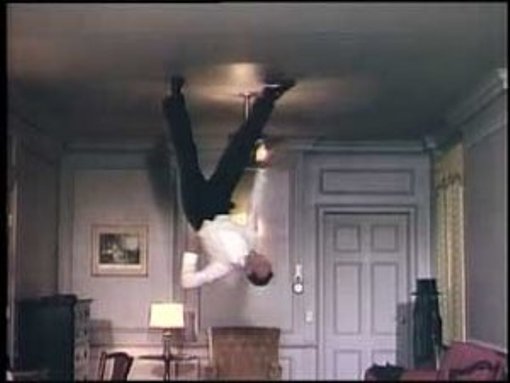
    Fred Astaire and Jane Powell as British dancers.  Features Astaire's famous "ceiling dance."

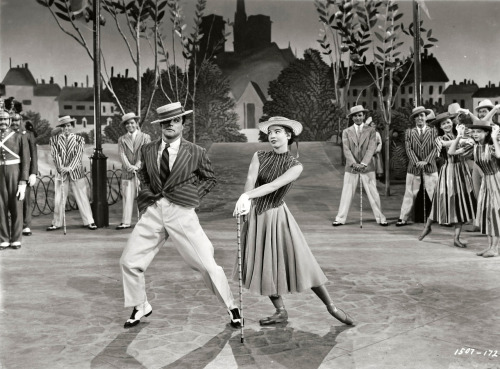
    Gene Kelly and Leslie Caron dance their way through a complicated love triangle.  Gene Kelly was also the choreographer.

    Singin' in the Rain (1952)
    Gene Kelly, Donald O'Connor, Debbie Reynolds an Cyd Charisse in a movie about the movies.

    The Belle of New York (1952)
    Fred Astaire as a turn-of the-century playboy.