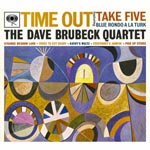
The origins of jazz are obscure, but one undisputed early trend is the use of piano in a central role. The piano was part of the small combos of early New Orleans Jazz, played a role in the Big Band/Swing era, came to the foreground in BeBop & Cool (Western) jazz of the 1950s, and continues to be a mainstay of jazz today. This year the Smithsonian features pianist
Dave Brubeck for Jazz Appreciation Month. His famous "Take Five" was a crossover hit and is still heard outside of jazz circles today.
Ragtime music on piano is sometimes considered the earliest jazz form, and other early jazz forms also featured the piano.
Scott Joplin and
Eubie Blake are the best-known of the early piano masters. Other early pianists are
Fats Waller,
Earl "Fatha" Hines, and
Jelly Roll Morton.
In the Big Band era the piano played a less central role, but some of the most important bandleaders were pianists:
Fletcher Henderson.
Duke Ellington, and
Stan Kenton.

The more combo-oriented Bebop style gave the piano room to shine once again. A few pianists became famous as soloists, and many who were associated with top saxophone or trumpet players established their own groups. Check out the piano stylings of
Thelonious Monk,
Oscar Peterson,
Bud Powell,
Charles Mingus,
Sonny Clark,
McCoy Tyner,
Erroll Garner or
Art Tatum. In the 1960s Bebop evolved into"Hard Bop," which included pianists
Horace Silver and
Ramsey Lewis.
The West Coast answer to East-Coast bop is known simply as "West Coast Jazz," and though other instruments exemplify this softer-sounding style, pianist
Vince Guaraldi (most famous for "Charlie Brown" TV special soundtracks) is considered part of the West Coast movement. "Cool" jazz is also in this vein. The best-known "cool" pianists are
Bill Evans,
Marian McPartland and
Dave Brubeck, though "bop" and "cool" are terms that can equally be applied to several performers.
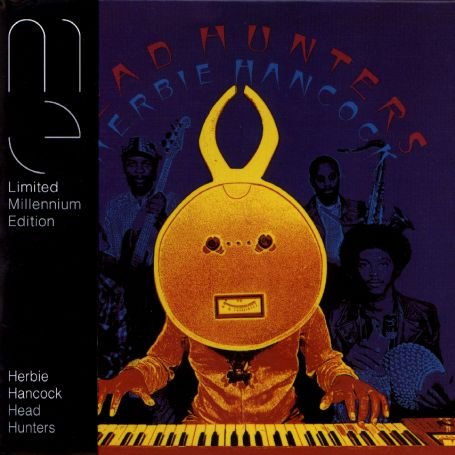
Since the 1970s jazz stylings have been combined with rock, funk, international styles (especially African and Latin American). Some of the more famous bands of the "fusion" movement that combined jazz with rock were headed by pianists:
Herbie Hancock (whose "Headhunters" album was jazz's first platinum album),
Chick Corea ("Return to Forever"),
Josef Zawinul ("Weather Report"), and
Toshiko Akiyoshi.
A few pianists have carved out niches as soloists in recent times, most notably
Keith Jarrett and
Keiko Matsui in the smooth jazz vein.
Brian Culbertson plays both piano and trombone as a funk fusion bandleader.
Claude Bolling combined classical genres with jazz sounds in his suites.

 Jazz began as an instrumental form, with the combos of New Orleans jazz. During the Swing Era some big bands moved from being primarily instrumental dance bands to bands that backed vocalists, drawing from the popular song traditions of Tin Pan Alley. This became more common during World War II, as radio entertained the troops (who of course might not be dancing). The band was still usually named for the instrumentalist who led the band, and several singers might perform with the band. A few of the singers who fronted these bands became stars in their own right, continuing to sing after Big Bands died out: Frank Sinatra, Bing Crosby, Mel Tormé, Rosemary Clooney, Carmen McRae, Anita O'Day, Pearl Bailey, and Doris Day.


 The clarinet and its cousin the saxophone have been two of the most popular instruments of jazz since the earliest days of the style. The clarinet was one of the central players of New Orleans jazz, and continued to be popular through the Swing (or "Big Band") era, when





 The Smithsonian isn't just about collecting obscure inventions and Hollywood memorabilia. It has a mission to preserve American history, and as part of that mission it has made April